

INTRODUCTION
Stock purchases can help one reach long-term financial success. Many investors and their families, however, are aware that shares may end up in the Investor Education and Protection Fund (IEPF) if they are not claimed. It is difficult and time-consuming to get them back when it does. The essay will explain the rationale for Unclaimed Shares to the IEPF, the risks involved, and—most importantly—how to keep your shares from becoming unclaimed. Whether you are a nominee, investor, or legal heir, these insights can help you protect your funds for the future.
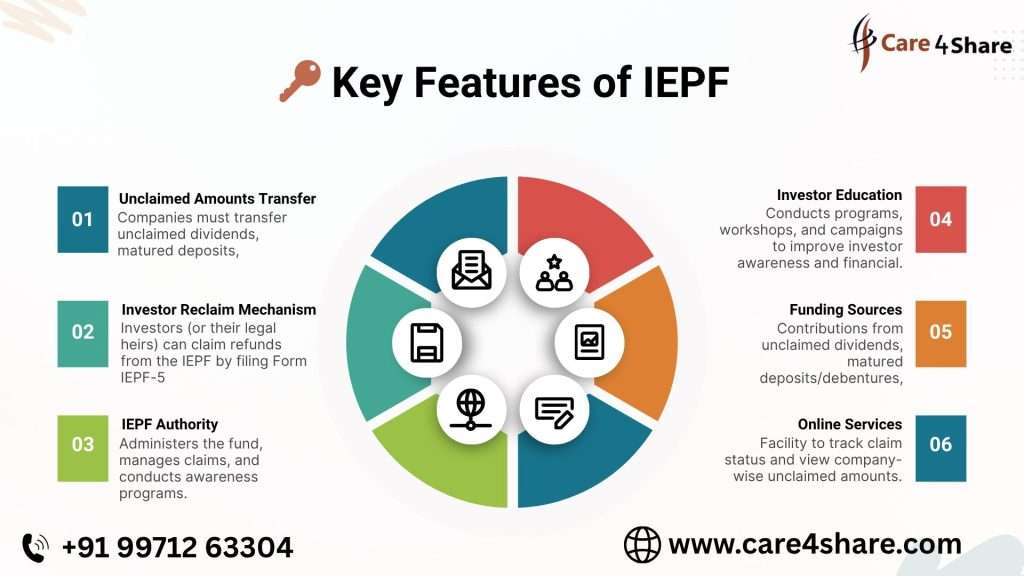
Understanding IEPF and Unclaimed Shares
The government formed the Investor Education and Protection Fund Authority (IEPFA) in 2013 to address investor concerns. It is overseen by the Ministry of Corporate Affairs. Its main goals are to raise investor awareness and guarantee that unclaimed or underpaid shares and sums are returned to be legal claimants.
How Can Shares Go Unclaimed?
Shares become unclaimed when:
- In seven consecutive years, shareholders did not claim dividends.
- There is no communication or activity from the shareholder’s side.
- Contact details or KYC information of the shareholder is outdated or incorrect.
- The legal heirs may be uninformed of the shareholder’s death or are unable to make a claim.
Dividends remain unclaimed in the event of any of the above situations, and the IEPF receives the shares that correspond to the unclaimed dividends Unclaimed Shares.
Important Legal Clause: IEPF Rules, Rule 6
Companies must transfer shares to the IEPF if dividends have not been claimed for seven years in a row, according to the IEPF Authority (Accounting, Audit, Transfer and Refund) Rules, 2016. The shareholder permanently loses ownership over the asset since all rights associated with those shares are also transferred.
The Consequences of Shares Being Transferred to IEPF
A large number of investors only discover after the fact that their shares have been moved to the IEPF. Here are the consequences:
- Loss of Control: You no longer have direct control over your shares until you apply for a refund from IEPF.
- Complex Reclaim Process: The process of claiming shares from IEPF involves detailed documentation, notarization, and coordination with both the company and the MCA portal.
- Legal heirs have additional challenges during succession or probate procedures when there is a delay in a succession plan.
- Potential Wealth Loss: The value of unclaimed shares may increase greatly, and if prompt action is not taken, these assets can remain unclaimed.
12 Useful Ways to Prevent Your Shares from Going Unclaimed
Regularly Claim Your Dividends
Always keep track of the dividend declaration dates by companies in your portfolio. Ensure your bank details (for ECS/NEFT) are correctly updated with your depository participant or the company’s registrar. Unclaimed dividends are the root cause—don’t ignore even small amounts.
Keep Contact Details Updated
It is required that you update your email address, mobile number, and communication address with the company. Inactive contact information frequently makes it impossible for businesses to get in touch with you.
Finish and Update KYC Questions
After that, finish your KYC compliance with your depository (NSDL/CDSL) to verify that your PAN, Aadhaar, and contact information are connected. When a person’s name (after marriage), address, or contact details change, they should be updated.
Dematerialize Your Shares
Convert physical shares to demat form. Physical shareholding is more prone to being lost, forgotten, or becoming unclaimed shares.https://www.iepf.gov.in/content/iepf/global/master/Home/Home.html Demat shares also provide better transparency and online visibility through your trading platform.
Monitor Inactive or Dormant Accounts
If you or your family members have multiple demat accounts, make sure they are reviewed regularly. Even if not in active use, dividend activity in these accounts should be tracked.
Consolidate Shareholding
Shares are often held in small quantities or scattered across different folios. Consider consolidating these into one folio or demat account. This helps you keep track more efficiently and prevents missing dividend credits.
Nominate a Family Member
Always assign a nominee to your demat and bank accounts. In the event of your demise, the nominee can easily claim or track the investments. Many unclaimed shares today are the result of no nominee being declared.
Educate Your Family
Keep your family members or chosen heirs updated on:
- The shares you hold
- The platforms where they are held (broker name, DP ID)
- Basic procedures for succession
Create a shareholding inventory and update it annually.
Link PAN and Aadhaar
For a great deal of financial transactions, PAN-Aadhaar connection is currently required by government laws. If you don’t link, your account can be frozen or flagged, which would make it more difficult to get dividends.
Watch for Public Notices
Companies send public notices before transferring shares to IEPF. These are published in national newspapers. If you spot your name, act immediately to claim the dividend or update KYC.
Reclaim Forgotten Shares Before 7 Years
You can claim forgotten dividends within 7 years by approaching the company’s Registrar and Share Transfer Agent (RTA). Don’t wait for the 7-year mark. Act early to avoid IEPF intervention.
Keep a Financial Will in Place
A registered Will can help legal heirs claim the shares and dividends with minimal legal hassle. It avoids delays in succession and ensures assets are not permanently lost due to inaction.
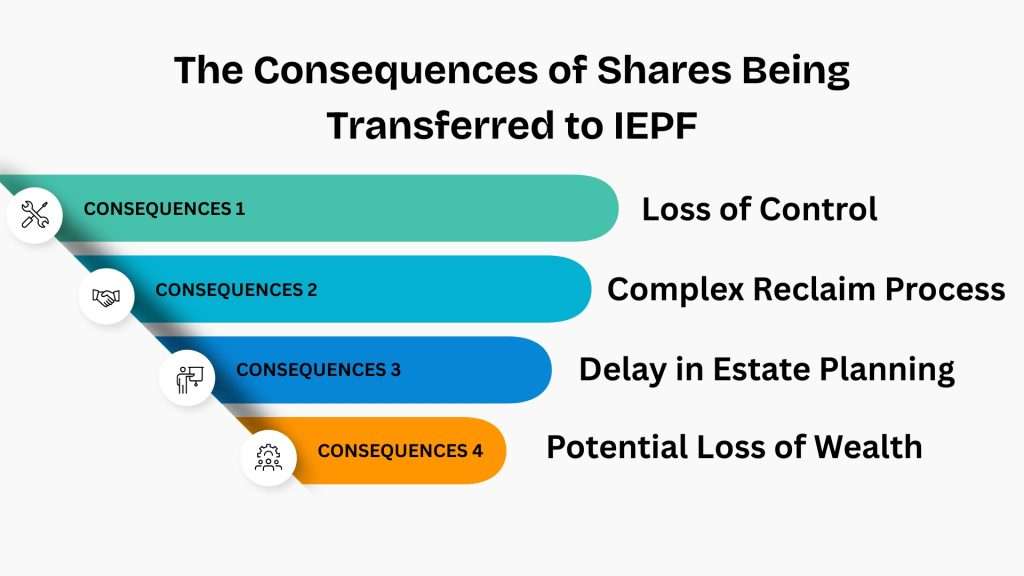
The Consequences of Shares Being Transferred to IEPF
A large number of investors only discover after the fact that their shares have been moved to the IEPF. Here are the consequences:
- Loss of Control: You no longer have direct control over your shares until you apply for a refund from IEPF.
- Complex Reclaim Process: The process of claiming shares from IEPF involves detailed documentation, notarization, and coordination with both the company and the MCA portal.
- Delay in Estate Planning: For legal heirs, it adds a new layer of difficulty during succession or probate proceedings.
- Potential Loss of Wealth: Unclaimed shares could grow in value significantly, and without timely intervention, these assets may remain out of reach.
If you have any query related to Shares eg. Physical Shares / IEPF refund / claim. We are available
How to Check If Your Shares Are in IEPF?
IEPF shares already owned by you or a family member can be verified here:
- Visit: https://www.iepf.gov.in/
- Go to “Search for Unclaimed Shares” section.
- Enter name, company name, and year.
- If any shares are listed, act immediately to initiate the refund process.
Final Thoughts
The unclaimed shares of an investor’s portfolio represent a hidden risk for the investor and his or her family. While the IEPF system is designed to protect shareholders’ interests, reclaiming assets once they’re transferred involves time and effort.
The good news is that there is no way to avoid this situation. You can protect your investments for the future by taking a proactive approach that includes communicating to registrars, keeping records, claiming dividends, and educating family members.
Don’t let your hard-earned wealth end up in limbo. Take charge now to ensure your shares remain where they belong—with you and your loved ones.
Do You Need Assistance With IEPF Refunds or Unclaimed Shares?
You can speak with firms that specialize in IEPF claim aid or financial legal advisors if you’re already having problems with unclaimed shares or require professional advice on the IEPF recovery procedure.
To ensure a successful refund, experts can assist with improving paperwork, working with registrars, and following up with the IEPF authority.